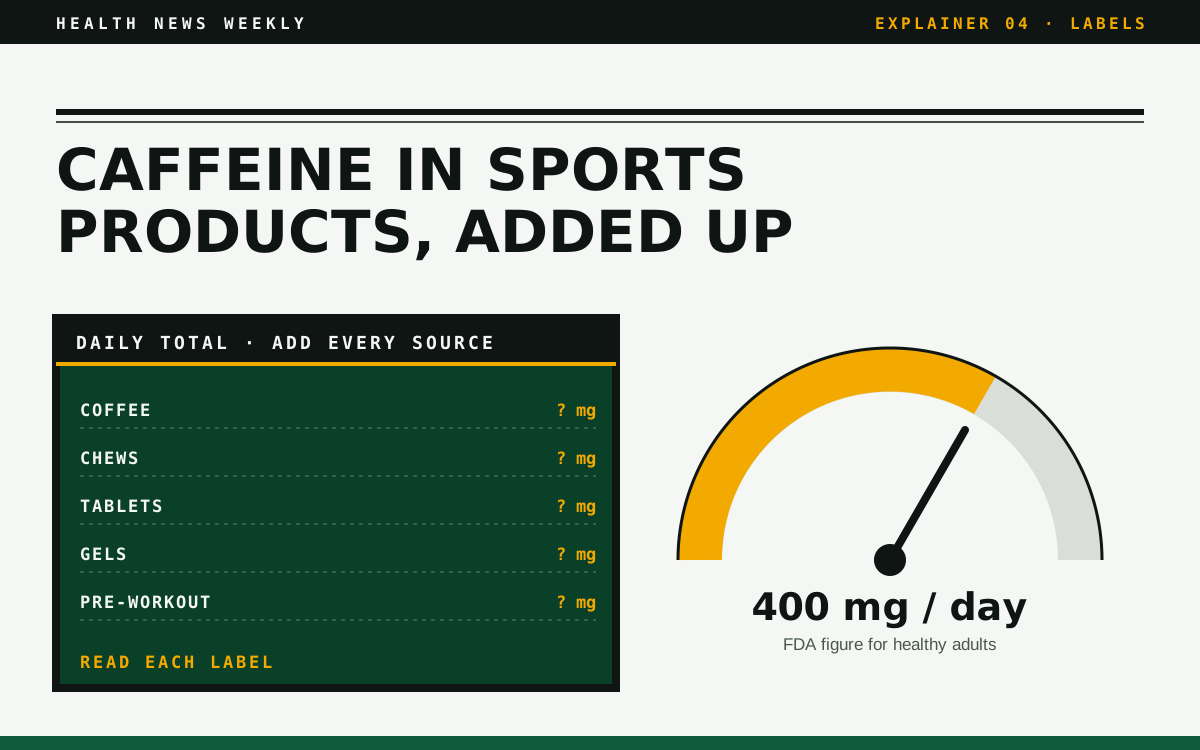
How much caffeine is in your sports nutrition, and does it matter? It can be anywhere from none to more than a cup of coffee per serving, depending on the product and often the flavor, and it all counts toward the same daily total as your coffee and tea. For most healthy adults, the FDA cites 400 mg a day as an amount not generally associated with negative effects; that is a reference point for a whole day, not a target to reach.
What the 400 mg figure means
The FDA's consumer guidance says that for most adults, the agency has cited 400 milligrams a day, about two to three 12-fluid-ounce cups of coffee, "as an amount not generally associated with negative effects" [1]. The same page stresses that sensitivity to caffeine and the speed at which people clear it vary widely, and that some medical conditions and medications make people more sensitive [1].
Three things the figure is not:
- It is not a recommended amount. Nothing in the FDA guidance suggests anyone should aim for it.
- It is not a per-serving or per-workout number. It is a whole-day figure that includes coffee, tea, soda, chocolate and every product with added caffeine.
- It is not for everyone. The FDA advises people who are pregnant, trying to become pregnant or breastfeeding, and anyone concerned about a condition or medication, to talk with a health care provider about whether to limit caffeine [1]. It also notes medical experts advise against energy drinks for children and teens [1].
Caffeine added to a chew or a tablet is handled by the body the same way as caffeine in coffee, the FDA says, so count every source [1].
Where caffeine shows up in sports products
The FDA notes that caffeine can turn up in products you might not expect, including energy and protein bars, gum and dietary supplements [1]. In the sports aisle it tends to appear as a flavor variant of an otherwise caffeine-free product. Examples we checked on Sep 30, 2026:
| Product and flavor | Caffeine listed | Where we read it |
|---|---|---|
| Clif Bloks, Black Cherry | 50 mg per serving | clifbar.com product page |
| Clif Bloks, Orange | 25 mg per serving | clifbar.com product page |
| Clif Bloks, Strawberry; Mountain Berry; Salted Watermelon | No caffeine callout shown | clifbar.com product pages |
| Nuun Sport + Caffeine | 40 mg per tablet | nuunlife.com product page |
| LMNT, Lemonade + Iced Tea (caffeinated) | 50 mg per stick | box image on the LMNT Amazon listing |
Two things stand out. First, caffeine is flavor-specific: a Clif Bloks variety box can mix caffeinated and caffeine-free packets, which is why our Clif Bloks entry reads the flavors in its box one by one. Second, the caffeinated version of a product can look very similar to the regular one. Nuun sells a Sport + Caffeine line alongside the regular Nuun Sport tubes, and the brand's page says its caffeinated tablets can be taken up to three times a day, which would be 120 mg [4]. LMNT does the same: the Citrus Salt flavor in our LMNT entry is shown as "no caffeine" in its listing images, while the Lemonade + Iced Tea box carries a "caffeinated" banner and 50 mg.
Energy gels and pre-workout powders vary even more. The ISSN's review notes that caffeine-containing products range from about 1 mg in milk chocolate to more than 300 mg per serving in some dietary supplements [2]. Read each label rather than assuming a product type has a typical amount.
How to find caffeine on a label
The FDA explains the rules plainly [1]:
- When caffeine is added as an ingredient on its own, packaged foods must list it in the ingredient list.
- When it comes from an ingredient that naturally contains it, such as chocolate, caffeine itself does not have to appear; only that ingredient does. Green tea extract is another ingredient to watch for; Nuun says it is the caffeine source in its Sport + Caffeine tablets [4].
- The amount in milligrams is often shown voluntarily, on the front of the pack or near the facts panel, but it is not always required.
- If a new product has added caffeine and does not say how much, the FDA suggests taking care the first time you try it.
Also check the serving size. A caffeine figure is per serving, and a packet, tube or stick may not be one serving. Our label explainer walks through a full panel.
Adding it up: a sample day
Here is how quickly a normal day of training can add up, using the FDA's coffee range and the label figures above. The day is made up; the arithmetic is not.
| Source | Amount | Caffeine |
|---|---|---|
| Regular brewed coffee | 2 × 12 fl oz | 226–494 mg |
| Clif Bloks, Black Cherry | 2 servings on a long ride | 100 mg |
| Nuun Sport + Caffeine | 2 tablets | 80 mg |
| Total | 406–674 mg |
Even at the low end of the coffee range, this day passes 400 mg, and most of that came from two cups of coffee. That is the practical lesson: the sports products are often the smaller share, but they are the share people forget to count. If you use caffeinated fuel on long sessions, a caffeine-free flavor for the rest of the day is a simple way to keep the total in view.
For the rest of the day's tally, the FDA's own reference figures for 12 fl oz servings are a useful yardstick: about 23 to 83 mg in a caffeinated soft drink, 37 mg in green tea, 71 mg in black tea, and 41 to 246 mg in an energy drink. Decaf is not zero either; the FDA gives 2 to 15 mg for an 8 fl oz cup [1]. Against those numbers, a 25 mg chew serving is closer to a cup of green tea than to a mug of coffee, and a 50 mg stick sits between green and black tea.
What the ISSN says the research found
The International Society of Sports Nutrition's 2021 position stand reviewed the research on caffeine and exercise. We report its findings as the ISSN states them; they describe study results, not what any one person will notice. The ISSN says caffeine has been shown to affect various measures of exercise output in many, but not all, studies, with the most consistent effects in longer aerobic exercise, and that effects differ between individuals [2]. The doses most consistently studied were 3 to 6 mg per kg of body mass, usually taken about 60 minutes before exercise; the minimum effective dose is unclear and may be as low as 2 mg per kg; and very high doses, around 9 mg per kg, are associated with a high rate of side effects [2].
Put that range into numbers for a 70 kg adult and 3 to 6 mg per kg is 210 to 420 mg, meaning the upper end of the research range alone is about the FDA's entire daily figure. The ISSN also notes that people differ in how caffeine affects sleep and feelings of anxiety, which it links partly to genetics and habitual intake [2]. For hydration, the 2016 joint statement from ACSM, the Academy of Nutrition and Dietetics and Dietitians of Canada says older warnings about caffeine as a diuretic appear overstated when it is habitually consumed in moderate amounts, giving under 180 mg as an example [3].
Ask a clinician before using caffeinated sports products if you are pregnant, trying to become pregnant or breastfeeding, take any regular medication, have a heart rhythm or blood pressure concern, or know you are sensitive to caffeine. The FDA lists a fast heart rate, palpitations, trouble sleeping, jitters, anxiety, upset stomach, nausea and headache as signs of too much caffeine [1]. Pure or highly concentrated caffeine powders and liquids are a separate and serious hazard; the FDA says toxic effects can be seen with rapid intake of around 1,200 mg, less than half a teaspoon of pure caffeine [1].
Sources
- U.S. Food and Drug Administration. Spilling the Beans: How Much Caffeine Is Too Much? Consumer update. fda.gov
- International Society of Sports Nutrition. Position stand on caffeine and exercise. Journal of the International Society of Sports Nutrition, 2021;18(1):1. PMID 33388079. Full text (PMC)
- American College of Sports Medicine, Academy of Nutrition and Dietetics, Dietitians of Canada. Joint position statement on nutrition for athletes, 2016. PMID 26891166. PubMed; full text as published by Dietitians of Canada: PDF
- Brand product pages read Sep 30, 2026 (source citations only): Clif Bloks Black Cherry, Orange, Strawberry, Mountain Berry, Salted Watermelon; Nuun Sport + Caffeine.
This article is educational and is not medical advice. Ask a qualified clinician before changing how you eat, drink or supplement around exercise, especially if you have an existing condition or take medication.